
Beard Care, Beard Styles, Grooming Tips
Beard Grooming Guide: The Complete Beard Care Routine for Every Length
Sep
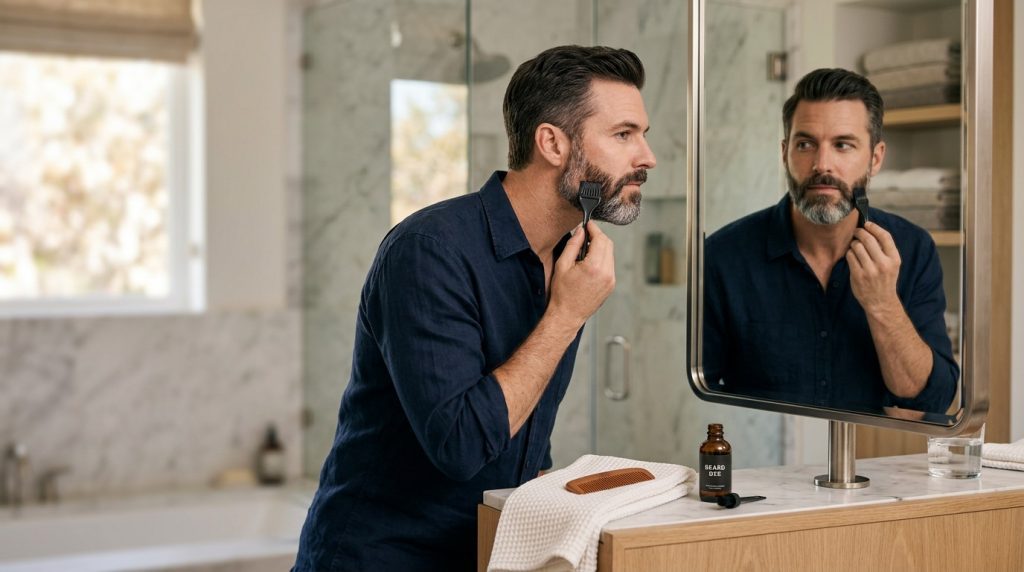
A good beard rewards consistency more than effort. Most men need about five minutes a day, a small kit and a handful of sound habits. This beard grooming kit guide walks you through each step in order, from the first itchy weeks to a full, styled beard. It also covers the skin problems that often go unmentioned, and it explains when a product will not fix the issue. All measurements are metric, and we flag where advice is a guide rather than a rule.
Beard grooming at a glance
If you read nothing else, follow this routine:
- Wash your face and beard with a gentle beard wash or face cleanser. Rinse with lukewarm water.
- Pat dry. Use a towel and do not rub.
- Moisturise the skin underneath. Apply beard oil to the skin first, then work it through the hair. Use a balm if you want hold.
- Brush or comb downwards while the beard is slightly damp.
- Trim every two to four weeks to keep the shape. Check the neckline weekly.
Everything below explains how, why and what to change for your beard.
Why beard grooming matters, and when to start
Healthy facial hair starts with healthy skin. According to dermatologists at the American Academy of Dermatology, the right skin care can prevent problems such as dandruff, ingrown hairs, acne and itch. In practice, grooming is less about vanity than about avoiding discomfort.
Start on day one. You should resist trimming and shaping for the first four to six weeks, because uneven growth needs time to show its pattern. However, you do not need to wait to wash, moisturise and brush. Early habits prevent the itch and flaking that make many men give up in week three.
Are beards hygienic?
The evidence is mixed rather than damning. Hospital-based studies have produced conflicting results, and some found no meaningful difference in bacterial colonisation between bearded and clean-shaven staff. What matters is care. The same source notes that experts recommend washing the beard and face daily, moisturising, combing out debris and trimming loose hairs.
Consequently, a groomed beard poses little concern, while a neglected one collects oil, skin cells and food debris.
What you need in a beard grooming kit
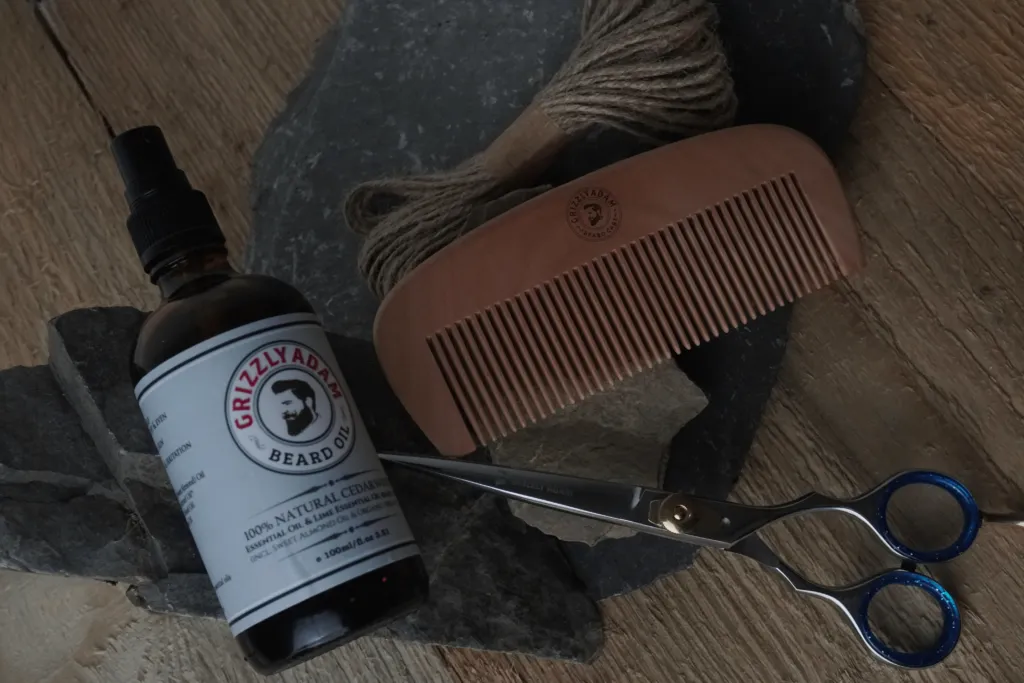
Start small. Two or three items cover most needs, and you can add tools as your beard grows.
| Item | What it does | Essential from |
|---|---|---|
| Beard wash or gentle cleanser | Removes oil, dirt and product build-up without stripping the skin | Day one |
| Beard oil | Moisturises the skin and softens the hair | Day one |
| Beard brush (natural bristle) | Distributes oil, trains direction, lifts flakes | Weeks 2 to 4 |
| Beard comb (fine and wide teeth) | Detangles and shapes longer hair | Once past about 2 cm |
| Beard balm | Adds light hold and extra moisture for flyaways | Mid-length beards |
| Clippers with guards | Sets and maintains length | Week 4 to 6 |
| Detail trimmer | Defines neckline and cheek lines | Week 4 to 6 |
| Beard scissors | Trims stray hairs and the moustache | Any length |
| Beard conditioner | Softens coarse or long hair | Long beards |
Skip anything you cannot explain the job of. A single-purpose gadget rarely earns its space.
Your beard care routine

Morning routine (about five minutes)
Rinse your beard with lukewarm water. Wash it if you exercised, sweated overnight or used styling product. Pat it dry, then apply a few drops of beard oil and brush or comb through. Finish with a small amount of balm if you want it to sit neatly.
Evening routine (about two minutes)
Cleanse your face and beard if you have been outdoors, in a gym or around smoke or grease. Rinse well, because leftover soap causes flaking. Skip heavy product at night if you wake with a greasy pillow.
Weekly routine
- Use a beard conditioner or softener once or twice.
- Exfoliate gently once a week if you are prone to dead skin, for example with a brush used before washing.
- Check the neckline and cheek line, and remove strays.
Monthly routine
- Trim to maintain shape, or book a barber.
- Wash your brush and comb with warm soapy water.
- Replace worn razor blades and check trimmer blades for sharpness.
How often should you wash your beard?
Advice varies, so match it to your skin and lifestyle. Some brands suggest two or three washes a week. Meanwhile, the source above notes that experts advise washing the beard and face every day. A sensible middle path is:
- Daily: rinse with water and wash your face, including the skin under your beard, with a gentle cleanser.
- Two to three times a week: use a full beard wash, or daily if you work in dusty, greasy or sweaty conditions.
- Never: use harsh body soap or dandruff shampoo daily unless a professional advises it.
If your skin feels tight or flaky, wash less often with a milder product. If it feels oily or spotty, wash more often and use a lighter moisturiser.
Washing, drying and moisturising
Choosing a beard wash
Facial hair is coarser than scalp hair, and the skin beneath it is thinner. Choose a formula labelled for beards or a gentle face cleanser. Avoid heavily fragranced products if your skin is reactive. Massage it in for 30 seconds, reaching the skin, then rinse thoroughly.
How to dry your beard
Wet hair is more fragile, so treat it gently.
- Towel drying: pat and squeeze, and never rub. Rubbing tangles and breaks hair.
- Air drying: fine for short beards, but leave it slightly damp so oil absorbs better.
- Blow drying: use the coolest setting, keep the dryer 15 to 25 cm away and keep it moving. This also helps you style as you dry.
Beard oil, balm and conditioner: which do you need?
Choose by skin type rather than by habit. The American Academy of Dermatology suggests a simple three-step plan, and its dermatologist matches the moisturiser to the skin: beard conditioner for acne-prone skin, beard oil for normal or dry skin, and a gentle moisturiser for sensitive skin.
| Product | Best for | Watch out for |
|---|---|---|
| Beard oil | Dry or normal skin, all lengths | Too much looks greasy |
| Beard balm | Mid to long beards, flyaways, light hold | Can feel heavy on oily or acne-prone skin |
| Beard conditioner | Coarse, long or acne-prone beards | Rinse out fully |
| Gentle moisturiser | Sensitive skin | Choose fragrance-free |
Oil and balm are not rivals. Oil moisturises, while balm adds moisture and holds shape. Many men use oil daily and balm on days they need control.

How much beard oil should you use?
Start with less than you think you need. Add more only if the beard still feels dry.
| Beard stage | Starting amount |
|---|---|
| Stubble to short (under about 1 cm) | 1 to 2 drops |
| Mid-length (about 1 to 3 cm) | 3 to 4 drops |
| Long (over about 3 cm) | 5 to 7 drops, or more for very long beards |
Warm the oil between your palms. Apply to the skin first by working your fingertips through, then stroke through the length. Apply after washing, when the hair is slightly damp.
Brush or comb?
Both distribute oil, but they suit different stages.
- Brush: best for short to mid-length beards. It trains direction and lifts flakes. Brush daily with light to medium pressure. The American Academy of Dermatology advises brushing gently every day before washing your face, and warns that brushing too hard irritates skin and can worsen dandruff.
- Comb: best for longer beards and moustaches. Use a wide-tooth comb on damp hair, and start at the ends to work out knots.
Once your beard is established, use both.
How to trim and shape your beard at home
Most trimming disasters come from rushing. Work slowly, and remember you can always cut more later.
Tools you need
- Clippers with guards (also called attachments)
- A detail trimmer
- A fine-tooth comb
- Small scissors for strays and the moustache
- Good lighting and a mirror
Choose your length before you cut
Decide whether your goal is length or shape. If you want a longer beard, only tidy the neckline and cheek line, and leave the body alone. If you like your current length, trim evenly to maintain it.
Step-by-step
- Wash and dry first. Beards shrink as they dry, so trimming wet leads to a shorter result than you planned.
- Comb downwards to untangle strands and lay hair in its natural direction.
- Start with a longer guard. The AI Overview in current UK search results gives the same advice: begin conservatively and step down.
- Trim with the grain, moving down the direction the hair grows. Going against the grain shortens hair faster and can look patchy.
- Taper the sides. Keep the chin slightly longer than the sides for a defined jaw.
- Set your neckline (see below).
- Define your cheek line and finish with scissors for strays and the moustache.
- Rinse and moisturise. Trimming can leave skin dry.
The two-finger neckline rule
The neckline is the step most men get wrong. Place two fingers above your Adam’s apple. Imagine a curved “U” running from behind one ear to that point and back up to the other ear. Remove hair below the line. Set it too high and you create a double-chin look, while too low gives a neckbeard.
The cheek line
Your natural cheek line usually works best. Use an unguarded trimmer to remove strays above it. A curved line tends to look softer than a ruler-straight one, while a straight line looks sharper and needs more upkeep. Keep both sides symmetrical by checking in the mirror after each pass.
The moustache
Comb the moustache downwards, then trim any hair that hangs over your lip with scissors. Do this dry. Keep the line even from left to right, and clean up the upper edge with a detail trimmer.
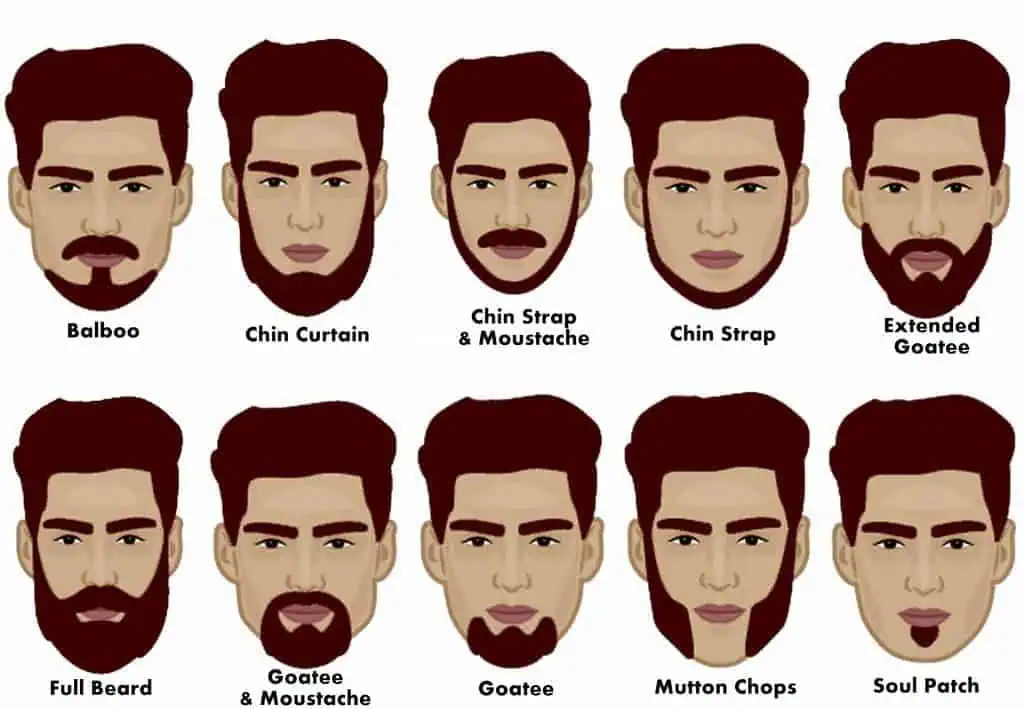
Which shape suits your face?
| Face shape | Beard shape that tends to work |
|---|---|
| Round | Slightly longer chin, shorter sides, angular cheek line |
| Square | Softer, rounded edges to balance a strong jaw |
| Oval | Most styles suit, so keep it balanced |
| Long | Fuller sides, shorter chin to avoid extending length |
| Diamond | Fuller chin and jaw to balance wider cheekbones |
These are style suggestions, not rules. A barber can adapt them to your growth pattern.
How often to trim
Every two to four weeks suits most beards. Touch up the neckline weekly. Trimming does not make a beard grow faster, because growth happens at the follicle beneath the skin (this is general dermatological understanding and is not sourced here). However, trimming removes split ends and keeps shape.
When to book a barber
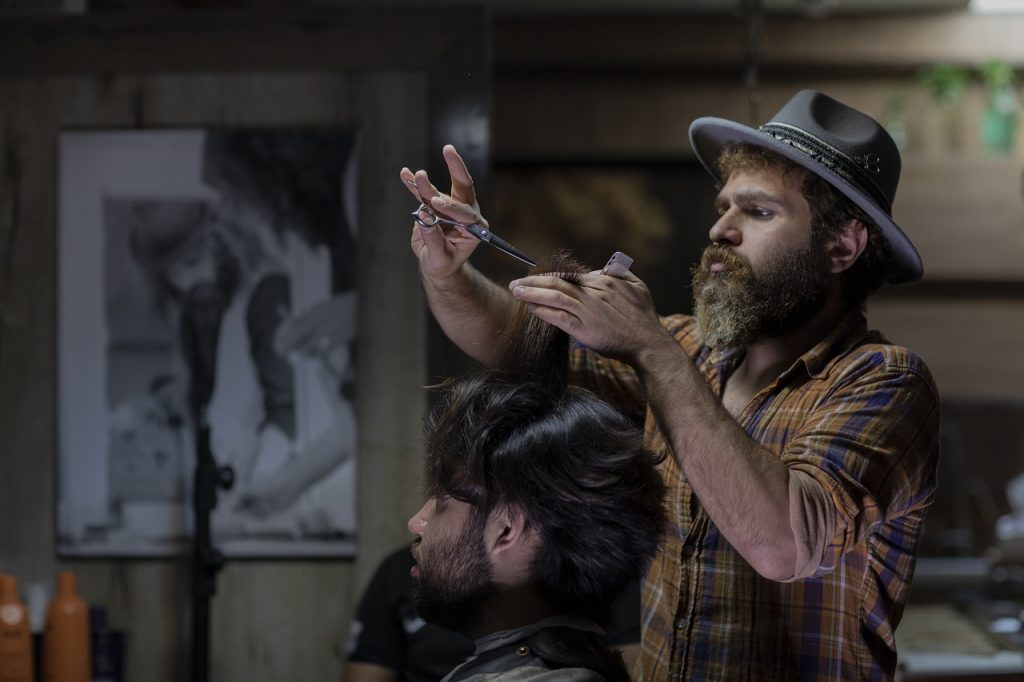
Book one for your first shape-up, before a big event or when you want a fade. Ask for the lines to be marked clearly so you can follow them at home.
How to style your beard
Natural styling with product
Warm a small amount of balm between your palms, and work it through from root to tip. Comb or brush to direct hairs, and use your fingers to shape stubborn areas. This “hand shaping” works well for flyaways and curls.
For a moustache, part it in the middle with the small end of your comb and direct the hairs outwards. Use a wax if you want a firmer hold.
Straightening a curly beard
Heat can tame curls, but it needs care. Use a heat protectant or a little oil first. Then:
- Start with a dry or slightly damp beard.
- Hold the dryer at least 15 cm away and use a medium heat.
- Use a brush or comb to create tension as you dry, moving downwards.
- Finish with a blast of cool air to set the shape.
A heated brush or beard straightener works on the same principle of heat plus tension. Keep tools moving, and stop if the hair feels hot or the skin stings. Limit heat styling to a few times a week.
Beard grooming by length
Growth varies with genetics, age and hormones, so use these stages as a rough map. The bands below run continuously, so no length falls between categories.
| Stage | Approximate length | Rough timeline | Routine focus |
|---|---|---|---|
| Stubble | Under 3 mm | First 1 to 2 weeks | Wash daily, light moisturiser, do not trim |
| Short beard | 3 to 10 mm | Weeks 2 to 6 | Beard oil, brush, wash regularly |
| Mid-length | 10 to 20 mm | About 1 to 3 months | Oil plus balm, first shape-up |
| Long | 20 to 50 mm | About 3 to 6 months | Comb and brush, conditioner, regular trims |
| Very long | Over 50 mm | 6 months or more | Conditioner, careful heat use, split-end checks |
Timelines are approximate and unverified. Some men reach full length sooner, while others take much longer.
Stubble and short beards (under 10 mm)
This stage feels itchiest because growing hairs have sharp tips that prick the skin. Wash daily, moisturise with one or two drops of oil, and brush gently. Do not trim yet. Give it time so you see your true growth pattern.
Mid-length beards (10 to 20 mm)
Now you can shape. Set your neckline and cheek line, and trim only what spoils the outline if you want length. Add balm if strays bother you. Keep washing consistently, because this is when flaking often appears.
Long beards (over 20 mm)
Longer hair needs more moisture and more mechanical care. Use a wide-tooth comb on damp hair, condition weekly and trim off split ends. Sleeping on a soft pillowcase reduces friction. Consequently, most long-beard problems trace back to dryness and tangling.
Grooming by beard type
Curly or coarse beards
Curls trap oil unevenly and tangle easily. Use a richer oil or conditioner, comb while damp and consider gentle heat for control. Curly hair is also more prone to ingrown hairs at the neckline, so keep the trimmer on a longer setting there.
Straight or fine beards
Fine hair can look flat or greasy if overloaded. Use lighter oils and smaller amounts, and skip heavy balm.
Patchy beards
Patchiness often reflects genetics and age, and many beards fill in with time. Wait at least a few months before judging. Meanwhile, keep a longer, even length to blend gaps, comb hairs across thin areas and choose a style that suits your growth. If patches appear suddenly, or the skin looks scaly or inflamed, see a GP or dermatologist.
Grey or white beards
Grey hair is often coarser and drier than pigmented hair. Add extra moisture, and use a mild purple-toned shampoo occasionally if yellowing bothers you. Check the label before using it on the face.
Seasonal and lifestyle care
- Winter: cold air and central heating dry the skin. Use a richer balm, moisturise more and avoid very hot showers.
- Summer: sweat and sunscreen build up. Rinse more often, choose lighter oils and wash out sun cream from the beard.
- Gym and swimming: rinse after exercise. Chlorine and salt water dry the hair, so rinse and moisturise afterwards.
- Sleep: a soft pillowcase reduces tangling in long beards.
- Eating and drinking: food gets caught in beards. Rinse or comb after meals, and hydrate well.
- Travel: carry a small oil, a folding comb and travel-size wash.
Troubleshooting: common beard problems and fixes
| Problem | Typical signs | Grooming fix | See a professional if |
|---|---|---|---|
| Itch | Prickly skin, mostly in the first weeks | Wash daily, oil, brush, be patient | Persistent redness or rash |
| Beard dandruff | Flakes, sometimes greasy patches | Gentle wash, brush before washing, moisturise | Flaking persists or skin looks scaly or inflamed |
| Beard acne | Spots beneath the hair | Clean regularly, lighter products, clean pillowcase | Painful, deep or persistent breakouts |
| Ingrown hairs | Small bumps at neck and cheeks | Longer trim setting, warm compress, moisturise | Infected, painful or recurring bumps |
| Flyaways | Strays sticking out | Brush, balm, patience | n/a |
| Split ends | Rough, brittle ends | Trim above the damage, less heat | n/a |
| Patchy areas | Uneven growth | Longer length, style to suit | Sudden patches or scaly skin |
Beard dandruff: dry skin or something else?
Flakes do not always mean dry skin. Many cases are a mild form of seborrheic dermatitis. The American Academy of Dermatology describes it as a very common cause of dandruff beneath the beard, sometimes with an itchy rash, scaly skin or greasy patches. That distinction matters because adding more beard oil will not treat it.
What to do:
- Brush gently every day before washing. The American Academy of Dermatology says this helps lift the scale so treatment works better.
- Wash the beard and scalp regularly. For flare-ups, dermatologists suggest a shampoo containing 1% ketoconazole or another product a dermatologist recommends.
- Ask a pharmacist about anti-inflammatory creams before using them on your face. Rules and labelling differ in the UK, so check locally.
- See a professional if it persists. The American Academy of Dermatology advises this if you also have acne-like breakouts, pain or broken skin beneath your beard.
Beard itch
New growth pricks the skin, and dryness makes it worse. Moisturise daily, wash gently and avoid scratching, which inflames the skin. If itch continues after the first few weeks or comes with a rash, treat it as a possible skin condition rather than a grooming issue.
Beard acne
Clogged pores can develop under facial hair. Wash regularly, use lighter non-greasy products and change your pillowcase often. Avoid touching your face with unwashed hands. For acne-prone skin, the dermatologist plan above favours a conditioner over oil. If spots are painful, deep or persistent, see a professional.
Ingrown hairs and razor bumps
These appear mostly where you shave or trim close, especially the neck and cheeks. The Cleveland Clinic notes that the beard area is among the most common sites and that coarse or curly hair and frequent shaving raise the risk.
To reduce them:
- Keep clipper guards a little longer at the neckline.
- Trim in the direction of growth.
- Moisturise so hairs can grow through soft skin.
- Do not dig at an ingrown hair. Warm compresses help, and persistent or infected bumps need medical advice.
If you shave your neckline, use a sharp, clean blade and light strokes.
Flyaways and split ends
Flyaways usually settle within a day, so resist snipping them. Brush, apply a little balm and wait. For split ends, trim just above the damage with sharp scissors, and use oil before any heat styling.
Patchy beards and slow growth
No product reliably grows hair where follicles are inactive. Cosmetic options include a longer length, careful blending and styling. Medical options exist, but speak to a GP or dermatologist before trying any treatment, because effects and risks vary.
Beard myths worth dropping
| Myth | Reality |
|---|---|
| Shaving makes hair thicker | Shaving changes the tip, not the follicle (general understanding, unverified here) |
| Trimming speeds growth | It tidies shape and removes split ends only |
| Beards are dirty | Evidence is mixed, and care matters more than beards themselves |
| More oil is always better | Excess makes beards greasy and can worsen breakouts |
| Regular shampoo is fine | Harsh formulas can strip skin and dry the hair |
| Flakes always mean dry skin | They can signal seborrheic dermatitis |
Beard Grooming Kit Guide FAQ
What is the two finger rule for beards?
Place two fingers above your Adam’s apple to find where your neckline should sit. Trim below that curved line.
What is the 3 month beard rule?
It is commonly cited advice to give a beard about three months before judging it. There is no official rule, and I did not verify a definition (unverified). Use it as a patience guide, since growth varies.
What are common beard grooming mistakes?
Trimming too early, setting the neckline too high or low, using too much oil, skipping washing, rubbing with a towel, ignoring persistent skin symptoms and cutting wet hair.
How should a beard look under the chin?
Keep the neckline a little above the Adam’s apple and connect it smoothly to the jaw. Avoid a hard line at the jawbone unless you want a very sharp look.
What is the most attractive beard length?
Taste varies, so there is no verified answer. Well-kept, even and matched to face shape usually beats length.
Are beards out of style in 2026?
We found no reliable data on this, so treat any claim with caution (unverified). A neat beard suits many styles either way.
How long does a beard take to grow?
It depends on genetics, age and hormones. Many men see a clear beard within a few months. Judge progress over months, not weeks.
Should I use beard oil every day?
Most men benefit from daily use in small amounts. Start with a few drops, and reduce if your beard feels greasy or your skin breaks out.
Can I use normal shampoo on my beard?
Occasionally, yes, but it can dry the skin and hair. A gentle beard wash or cleanser suits daily use.
Your one-page Beard Grooming Kit Guide Care Plan
- Daily: rinse or wash, pat dry, moisturise the skin, brush or comb.
- Weekly: condition, exfoliate gently, tidy the neckline.
- Every 2 to 4 weeks: trim with guards, then refine edges.
- Watch for: persistent flaking, redness, pain or sudden patches, and get them checked.
- Remember: consistency beats a crowded shelf. Start with wash and oil, and add tools as your beard grows.
Written on 21/09/2026 by Nigel Owen
Authoritative sources Below:
- American Academy of Dermatology, healthy beard tips: https://www.aad.org/public/everyday-care/skin-care-secrets/face/healthy-beard
- American Academy of Dermatology, DIY treatment for common beard problems: https://www.aad.org/public/everyday-care/skin-care-secrets/face/diy-treatment-common-beard-problems
- American Academy of Dermatology, seborrheic dermatitis self-care: https://www.aad.org/public/diseases/a-z/seborrheic-dermatitis-self-care
- The Conversation, beards and microbes: https://theconversation.com/beards-and-microbes-what-the-evidence-shows-256917
- Cleveland Clinic, ingrown hair: https://my.clevelandclinic.org/health/diseases/17722-ingrown-hair

RIGHT NOW, we are offering all our new customers 20% OFF your first order, Our FREE 32 page beard guide full of helpful info + A Beard Oil for just a penny. GET ALL THE DETAILS IN YOUR INBOX BELOW:
